In this story
A note from Common Ground
Project editorial introduction based on a bounded official summary; observation prompts are editorial.
A window, imagined
Imagine visiting a friend's apartment in the United States and noticing a paper design near a window. This is an invented scene, not a documented household. Before deciding that you know what it means, look at its edges: where does the paper hold together, and where does daylight enter?
That question gives you an approachable way into Chinese paper-cutting. You do not need to recognize every motif to begin looking carefully. Treat your first impression as a question rather than a translation.
Media selection · Reviewed by the project owner on November 5, 2026. Context images do not replace the story’s cited evidence.
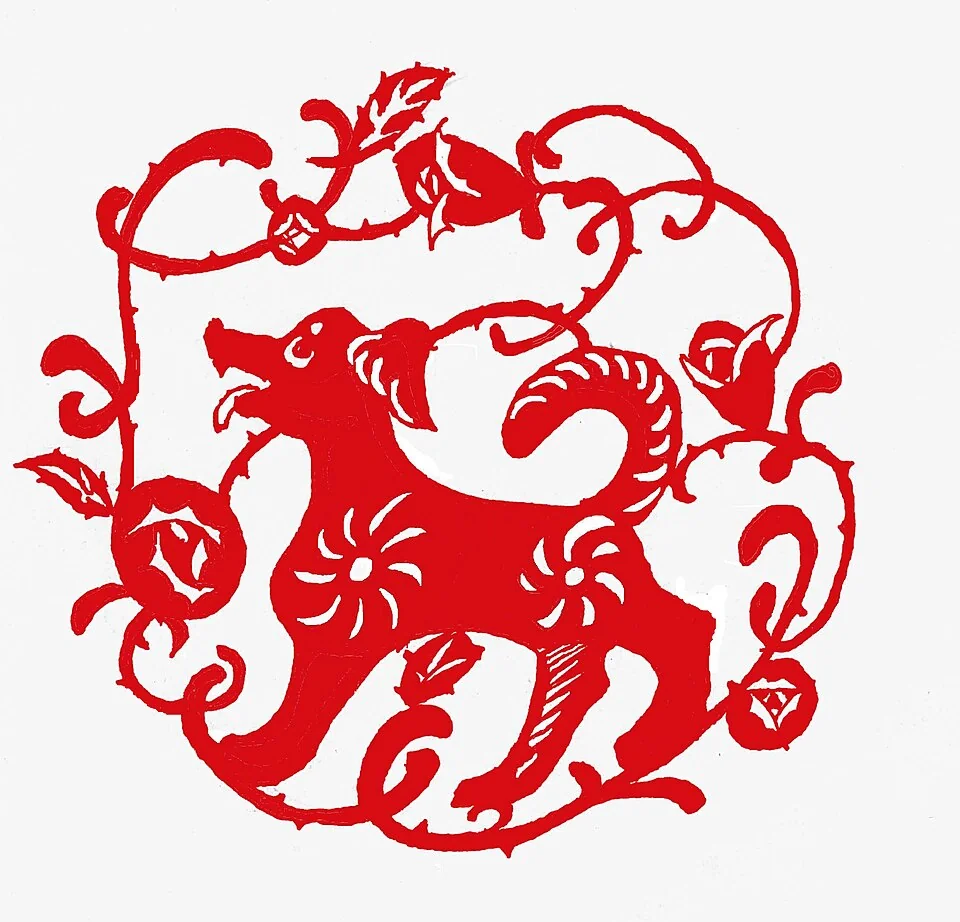
An openwork dog design. Follow the connections and the spaces left between them.
Image source & license
Made by Fanghong · CC BY-SA 3.0. WebP delivery copy; resized if needed, composition unchanged. Original image & full credit · License
More than one way to cut
UNESCO's introduction describes paper-cutting across different Chinese regions and ethnic communities. Makers use cutting and chisel engraving; works may be colored or left uncolored. Designs and uses vary, including decoration, celebrations, and ritual purposes. Its account also describes skills passed from mothers to daughters, without making that the only possible route of learning. [S1]
At a 2018 Lunar New Year event in Washington, DC, a Smithsonian cultural interpreter watched a paper-cutting master from Chengdu cut the character chun, meaning spring, in less than a minute. The interpreter’s account describes visitors joining a conversation around the work. A quick cut became an opening for people to ask questions, not just a decoration to take home. [S2]
Read without guessing
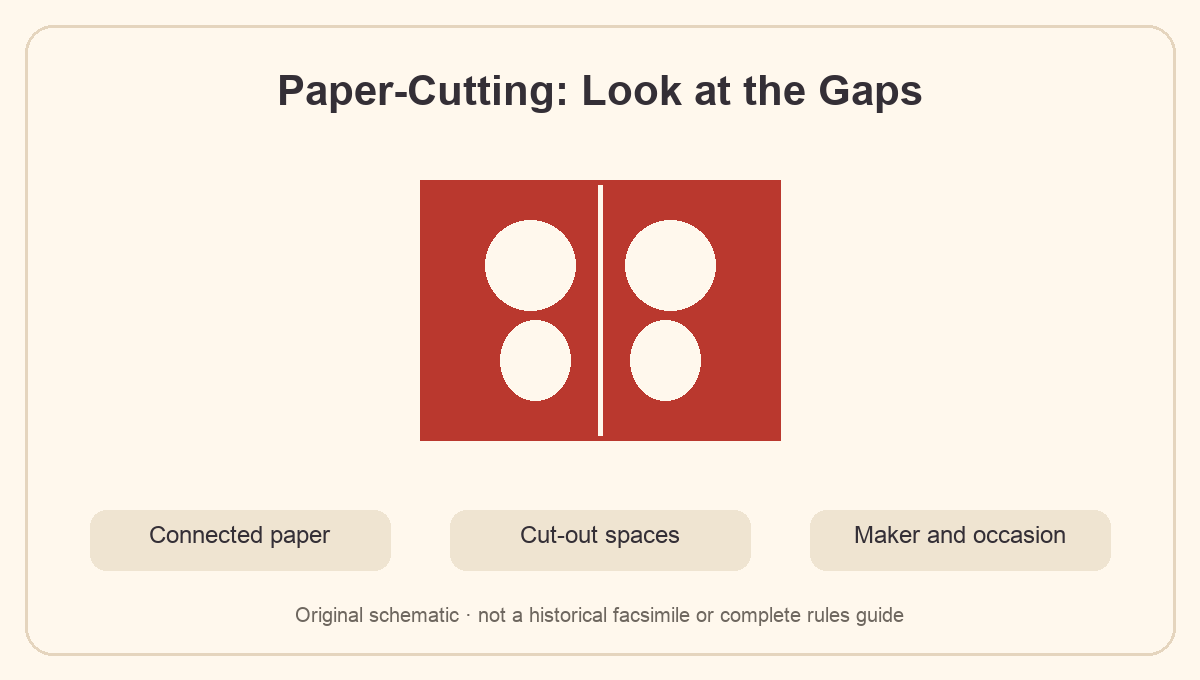
Try reading a design in two passes. First, describe only visible features: a repeated curve, a narrow connection, an open space, or a figure you think you recognize. Then write your interpretation separately. “This looks celebratory to me” leaves room for correction; “this always means good fortune” shuts the question too early.
Our suggested distinction is between looking and assigning meaning. Even a clear photograph cannot tell you everything about ownership, intention, or use. A caption can help, but check whether it describes this object or offers a general introduction to the craft.
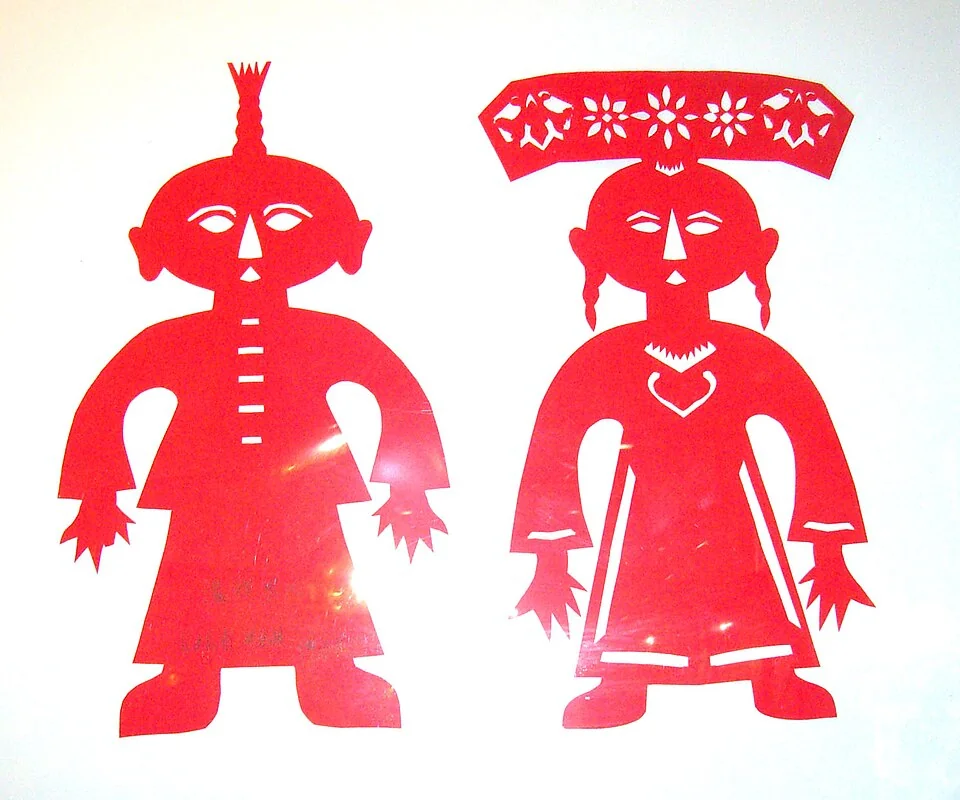
Figures in paper-cut art: another way for a cut shape to become a character.
Image source & license
Unknown author — see source · CC BY-SA 3.0. WebP delivery copy; resized if needed, composition unchanged. Original image & full credit · License
A small field note
For your culture field notes, choose one detail rather than cataloging an entire tradition. Record an observation, one supported source detail, and an open question. You might write: “I noticed spaces between connected shapes. UNESCO describes several making methods. Which method produced this example?”
If you share your note with a friend, include the source link and keep your uncertainty visible. The pleasure here is not passing a symbol quiz. It is slowing down enough to see a paper object as someone's considered work, with a setting and a purpose still worth learning about.
3 optional questionsWant a tiny challenge?
A little practice, with room to try again.
Want a tiny challenge?
A little practice, with room to try again.
How did this land?
Just your reaction, kept in this browser. Tap again to change your mind.
A little trail to follow.
Want to dig into a detail? These links take you to the original sources. Our suggestions and imagined examples are labeled in the story.
- UNESCO — Chinese paper-cut (opens in a new tab)
Official heritage summary; read through search-index text. Direct page access was not established. Limited introductory scope; not an independent field study.
- Smithsonian: Embracing the Year of the Dog (opens in a new tab)
First-person account of a Chengdu paper-cutting master cutting chun and visitors joining discussion at a 2018 museum event; not our interview.
What did you notice, and what still needs context?
Your question, a memory, a different way your family does things — there's room for it here. These notes are just for you in this browser.
Downloads and copies include notes and corrections for this story. To send it to us, attach it yourself in an email to support@goodbye.help. Saved stories and practice scores stay out of the download.