In this story
A note from Common Ground
Common Ground editorial: distinguish documented details from our suggested ways of looking.
Whose mark is this?
On Chen Chun’s handscroll Flower, a seal impression associated with the collector Liang Qingbiao adds a voice beyond the painter’s. The Hong Kong Museum of Art discusses this example alongside the seal itself. A small mark can therefore open a question about an artwork’s later life, rather than simply telling us who painted it. [S1]
Media selection · Reviewed by the project owner on November 5, 2026. Context images do not replace the story’s cited evidence.
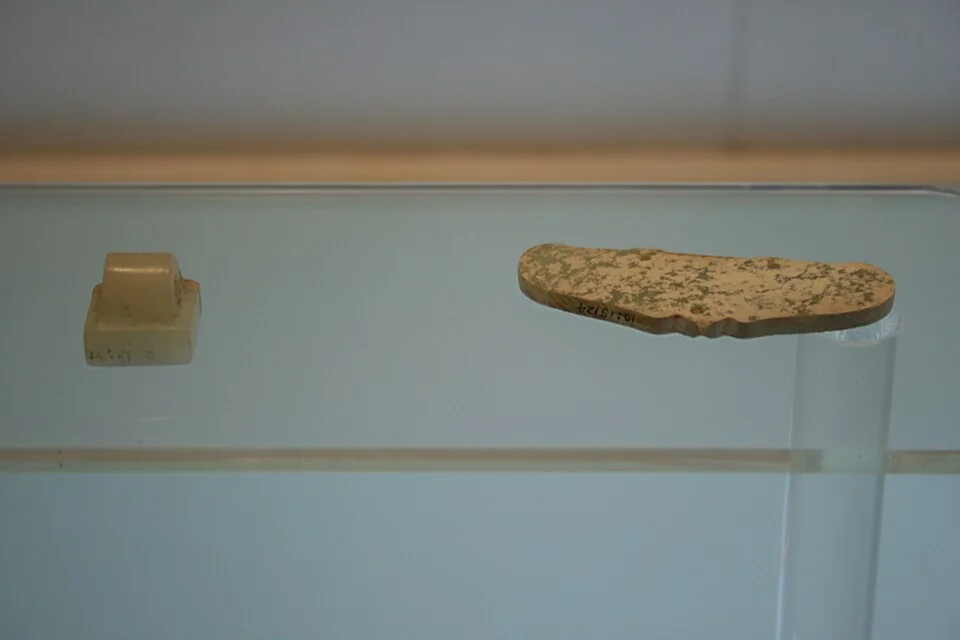
A seal-related object in a collection. A mark on paper has a material counterpart.
Image source & license
Gary Todd · CC0. WebP delivery copy; resized if needed, composition unchanged. Original image & full credit · License
Signature or encounter
The museum distinguishes artists’ seals, which can function as signatures, from collectors’ or connoisseurs’ seals recording ownership or viewing. A collector’s mark is not automatically the painter’s signature. Nor does every viewing mark establish ownership. The distinction matters before we begin trying to read individual inscriptions. [S1]
Evidence needs company
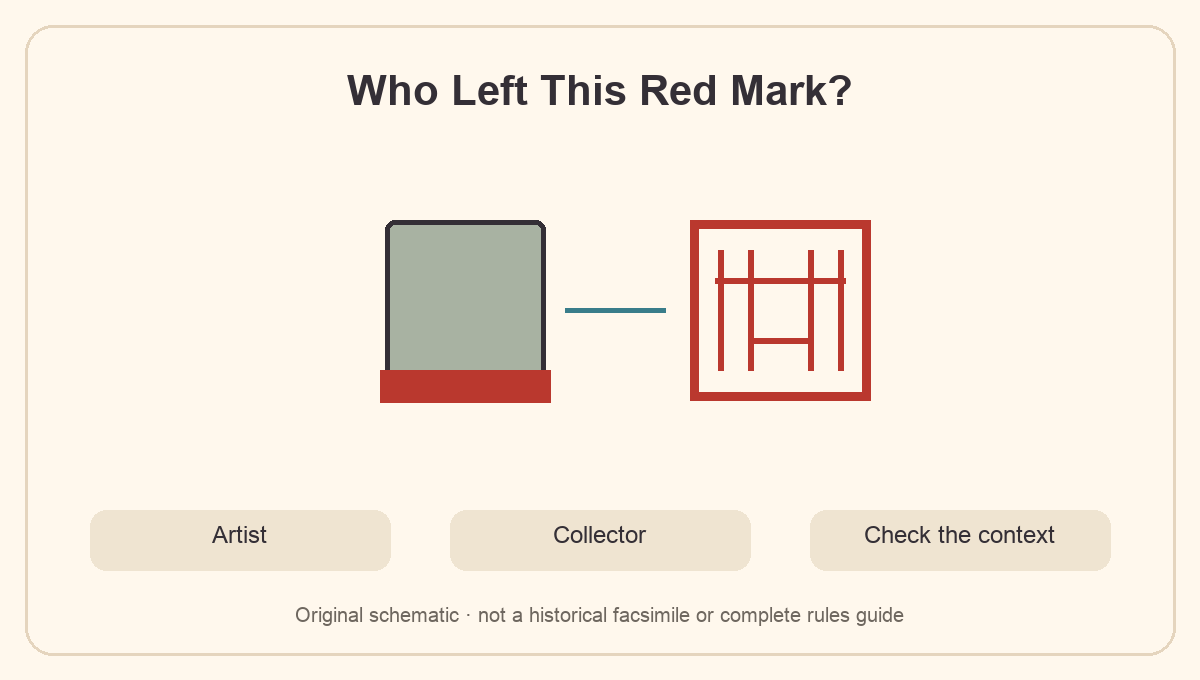
The museum also warns that seal impressions alone cannot settle authenticity: genuine and false works or impressions can occur in misleading combinations. It recommends considering features including lettering, color, placement, and the owner’s habits of use. A seal is evidence to interpret in context, not a guarantee that ends an investigation. [S1]
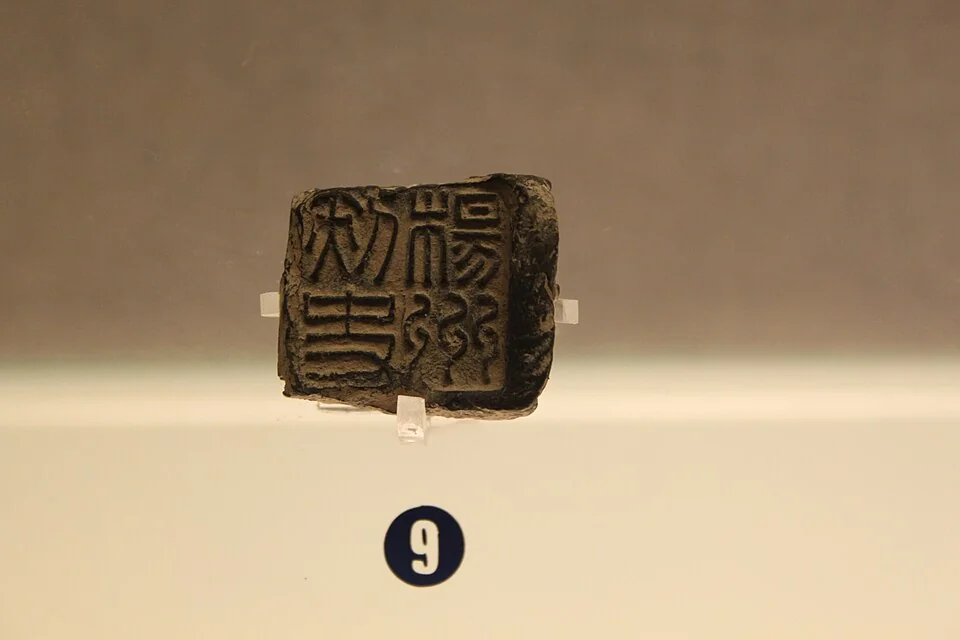
A seal impression in the image record: a clue to investigate alongside other ownership evidence.
Image source & license
Gary Lee Todd, Ph.D. · CC0. WebP delivery copy; resized if needed, composition unchanged. Original image & full credit · License
Think about a bookplate
Imagine an invented American scene: you find a used book bearing an author’s printed name and a former reader’s bookplate. The two names describe different relationships to the same object. This analogy can help separate making from later possession, but it does not make a bookplate identical to a Chinese seal or establish how any particular scroll traveled.
Try describing a mark before explaining it. Where is it placed? Does the museum identify its user? Does the label call it an artist’s seal, a collector’s seal, or something else? If you cannot read it, record that limitation. Guessing an inscription can send the rest of your interpretation in the wrong direction.
This video explores seal carving. It cannot identify the owner of an unfamiliar seal or authenticate a painting.
Let a question remain
A useful field note has three lines: the visible or catalogued detail, the relationship supported by the museum, and a question still open. With Flower, begin with the institution’s identified collector connection rather than inventing a complete chain of ownership. One documented connection does not supply every missing chapter.
This way of looking allows a painting to have an ongoing history without making every later mark equally trustworthy. You can enjoy the work while also asking how people claimed, recognized, or responded to it. The red impression becomes neither decoration to ignore nor proof to worship, but a small piece of a larger human record worth reading carefully.
3 optional questionsWant a tiny challenge?
A little practice, with room to try again.
Want a tiny challenge?
A little practice, with room to try again.
How did this land?
Just your reaction, kept in this browser. Tap again to change your mind.
A little trail to follow.
Want to dig into a detail? These links take you to the original sources. Our suggestions and imagined examples are labeled in the story.
- Hong Kong Museum of Art: Vermillion Impressions (opens in a new tab)
PARSED text, paragraphs 57–62: artist/collector distinction, viewing versus ownership, Liang Qingbiao seal on Chen Chun Flower, authentication limits and examination factors. Article omits broad first-use chronology and does not independently authenticate an object.
What detail changed your first impression?
Your question, a memory, a different way your family does things — there's room for it here. These notes are just for you in this browser.
Downloads and copies include notes and corrections for this story. To send it to us, attach it yourself in an email to support@goodbye.help. Saved stories and practice scores stay out of the download.