In this story
A note from Common Ground
A shape can catch your eye. Context helps you understand what you found.
A shape is a clue, not a translation app
You spot a Chinese character on a sign. It looks a little like something you recognize. That’s a good reason to get curious—and a shaky reason to announce what the whole sign means.
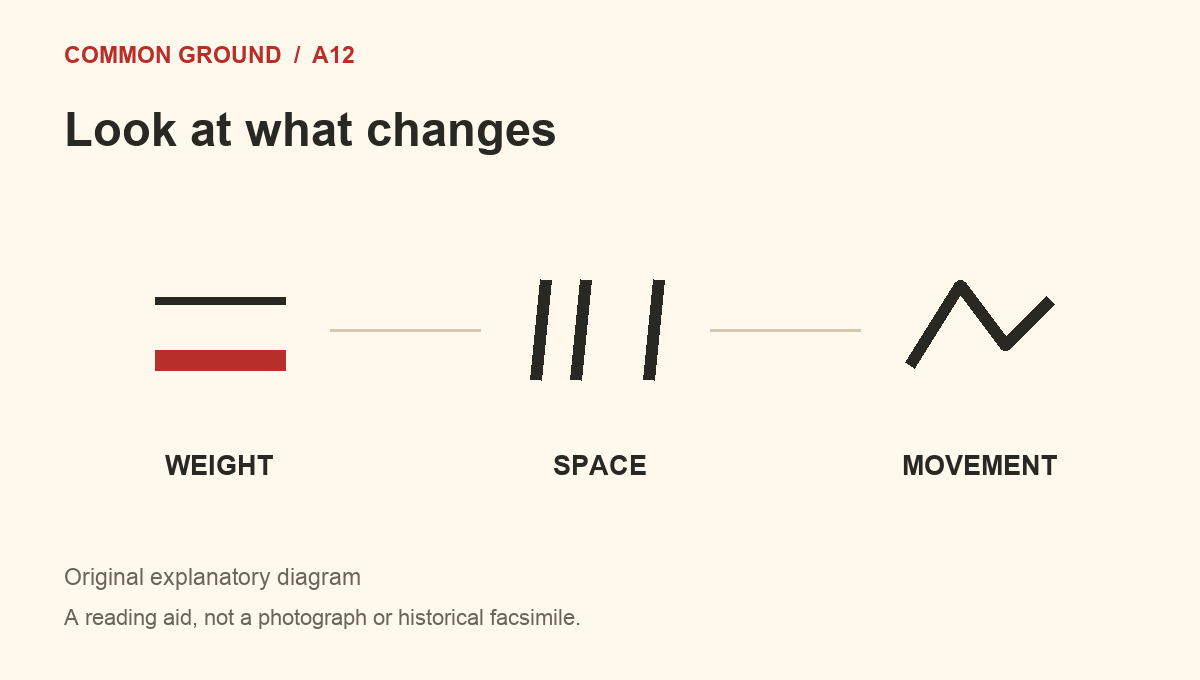
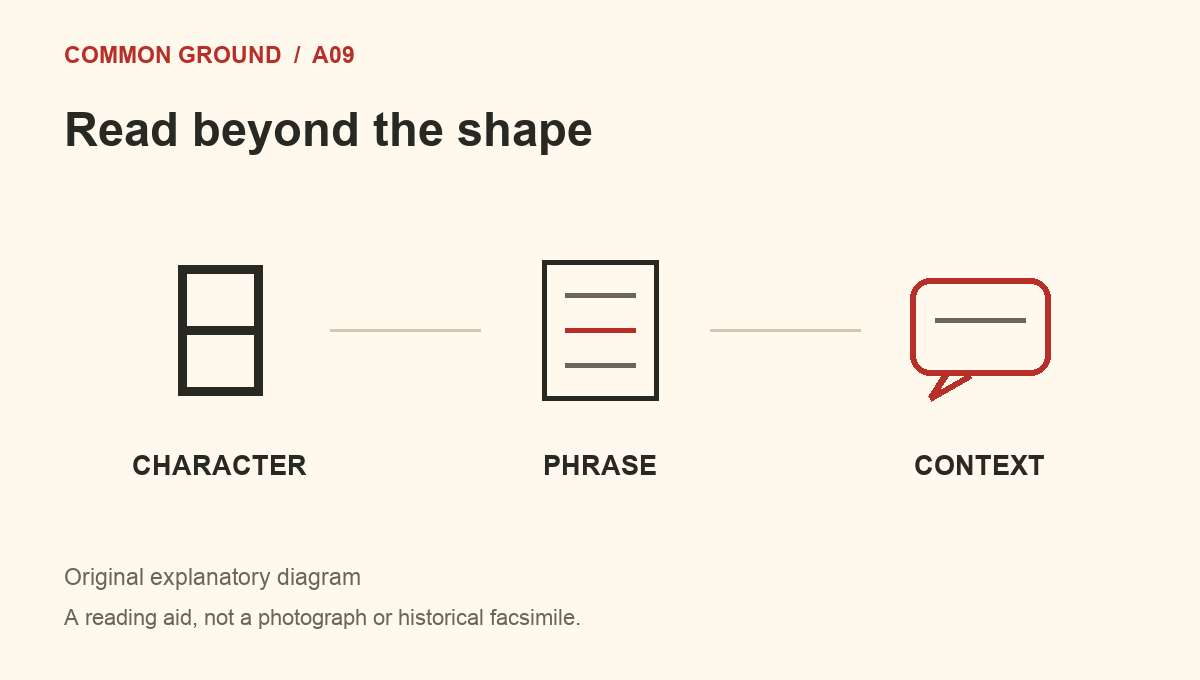
For a first encounter, separate three questions: Which character is it? What does it mean here? What kind of writing am I looking at? You don’t have to solve all three by staring harder.
Media selection · Reviewed by the project owner on November 5, 2026. Context images do not replace the story’s cited evidence.
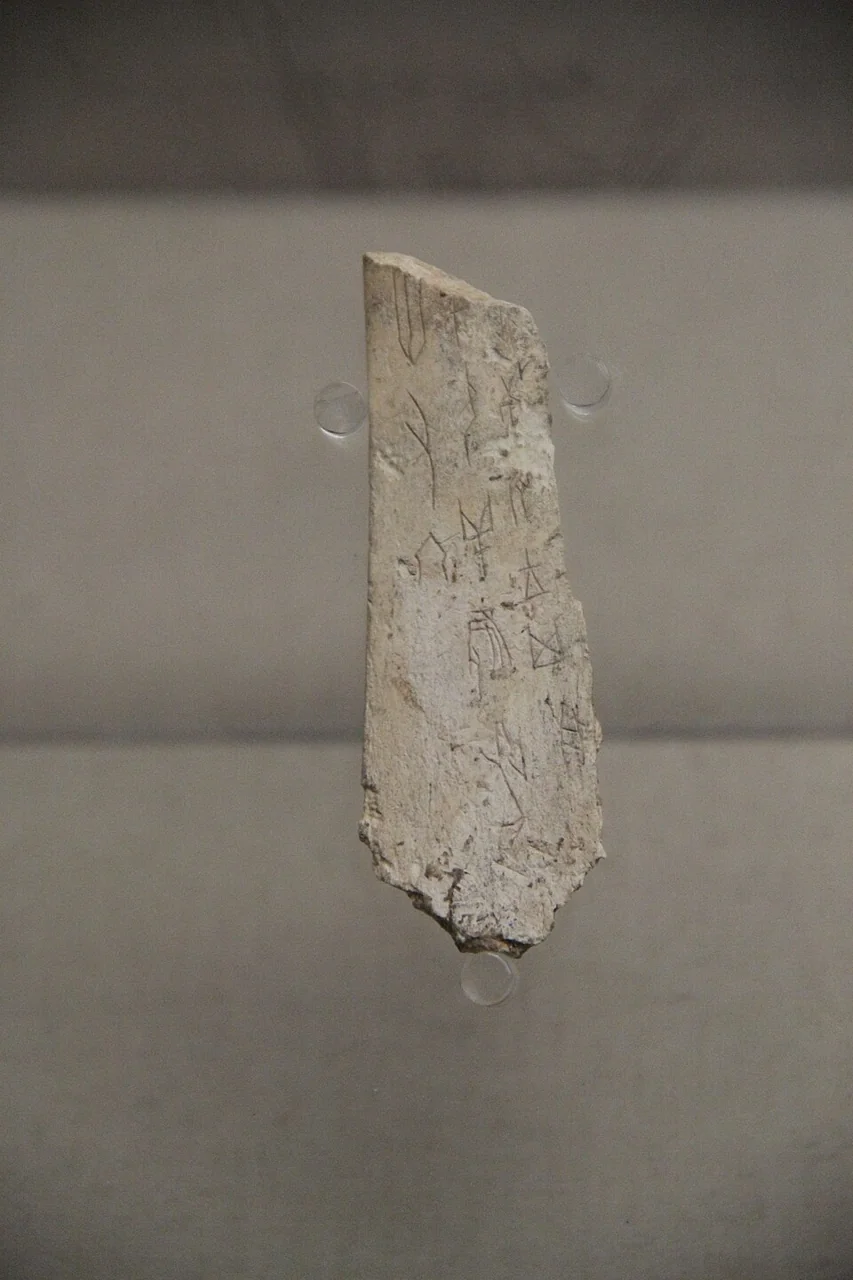
An inscribed bone in a collection. The object record helps turn looking into a better question.
Image source & license
Gary Todd · CC0. WebP delivery copy; resized if needed, composition unchanged. Original image & full credit · License
When writing meant asking a question
Columbia University’s teaching edition of Shang oracle-bone inscriptions describes royal divination around 1200 BCE: questions put to spirits on behalf of Shang rulers. Its translated examples include worries about a sick tooth and a proposed settlement. [S1]
Suddenly, the marks have a human problem behind them. Someone wanted to know why a tooth hurt or whether a decision would work out. That is our reading of the examples, not a diagnosis of the person or a transcript of an invented scene. [S1]
An ancient inscription and a modern restaurant sign are different reading jobs. Recognizing a resemblance doesn’t establish that two marks have the same date, form, or meaning.
Try a museum’s side-by-side exercise
The Asian Art Museum’s seal-script activity includes examples labelled sun, moon, water, hand, forest, and middle or center. It gives beginners an actual set of forms to compare. [S2]
Start with the labelled example for sun. Compare it with the modern printed character 日 in this article’s illustration. Ask what you can see, then check the label. The diagram here is modern typography, not a tracing of an oracle-bone inscription or a complete evolution chart.
Now you have one example you can point to and check. That is real progress. For a new character, start again with a reliable reference rather than assuming the same visual trick will work.
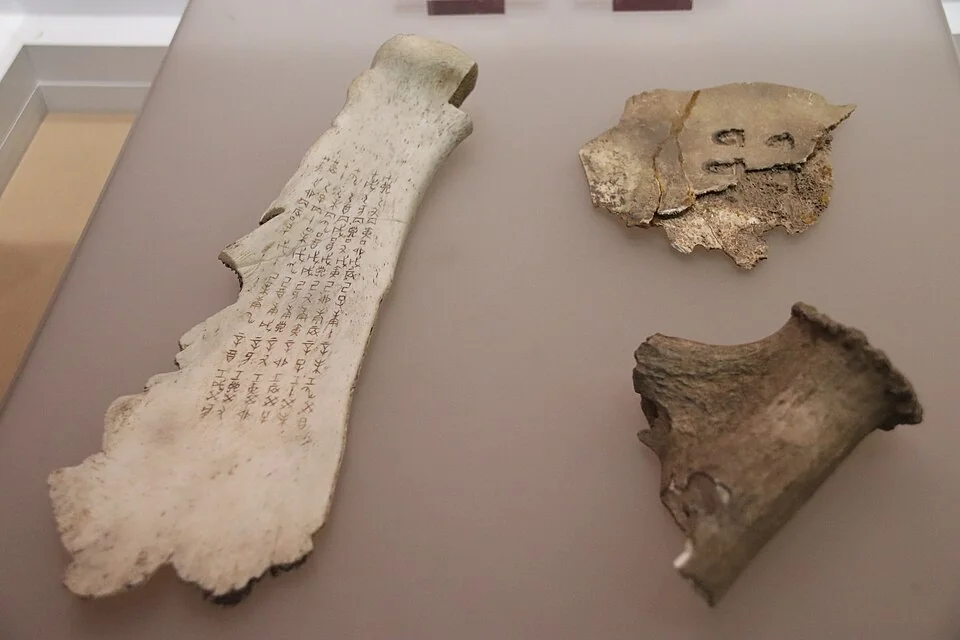
Oracle-bone fragments: surviving writing comes to us on physical materials, with gaps and edges.
Image source & license
Gary Lee Todd, Ph.D. Complete indexed photo collection at WorldHistoryPics.com. · CC0. WebP delivery copy; resized if needed, composition unchanged. Original image & full credit · License
The logo test
Imagine an American designer sees the word ‘bank’ in a logo. The letters don’t tell them whether it means a financial institution or the side of a river. They need context.
That’s an invented analogy about reading, not a claim that English spelling and Chinese characters work in the same way. It helps with one habit: don’t stop at a shape.
For your next unfamiliar sign, save the whole phrase and where you saw it. Use a dictionary or ask a knowledgeable reader. Keep their explanation attached to the example, especially if it’s a name or a joke.
A useful conversation starter is ‘What does this mean in this phrase?’ It leaves room for the answer to be more interesting than the picture you thought you saw.
The video is a calligraphy demonstration. Brushwork alone cannot establish a character’s meaning or historical origin.
3 optional questionsWant a tiny challenge?
A little practice, with room to try again.
Want a tiny challenge?
A little practice, with room to try again.
How did this land?
Just your reaction, kept in this browser. Tap again to change your mind.
A little trail to follow.
Want to dig into a detail? These links take you to the original sources. Our suggestions and imagined examples are labeled in the story.
- Columbia University — Late Shang oracle-bone inscriptions (opens in a new tab)
University teaching edition of translated inscriptions, around 1200 BCE and royal divination; selected records of elite concerns, not every person’s daily life.
- Asian Art Museum — Seal Script Activity (opens in a new tab)
Labelled seal-script comparison examples. Modern 日 is typography, not an archaeological facsimile.
What would you like to ask about language & stories?
Your question, a memory, a different way your family does things — there's room for it here. These notes are just for you in this browser.
Downloads and copies include notes and corrections for this story. To send it to us, attach it yourself in an email to support@goodbye.help. Saved stories and practice scores stay out of the download.