In this story
A note from Common Ground
Project editorial: sourced details are separated from imagined practice scenes.
A publisher at the board
Weiqi, called Go in English, uses black and white stones on a grid. One story about the game begins away from a match: in 1609, Wang Tingne published a weiqi manual. Historian Zach Berge-Becker discusses it in a chapter hosted by the University of Washington. Publishing about play helped Wang present himself as a cultivated gentleman. The board belonged to a public image as well as a game. [S1] [S2]
That makes a useful opening question. When a game appears in a book, whose version of playing becomes visible? A polished presentation can preserve knowledge while also emphasizing the people and values its maker wants readers to notice. We can enjoy the game and still ask who is outside the frame.
Media selection · Reviewed by the project owner on November 5, 2026. Context images do not replace the story’s cited evidence.
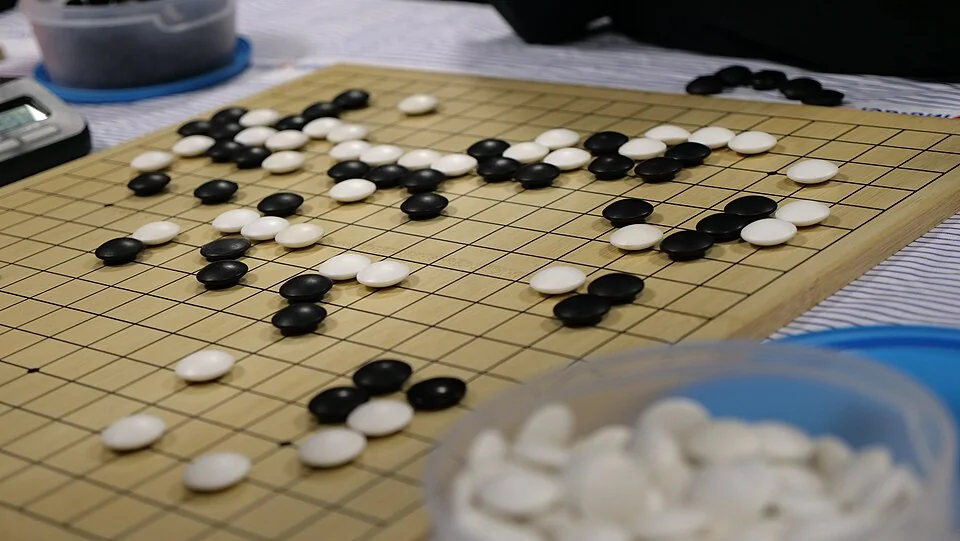
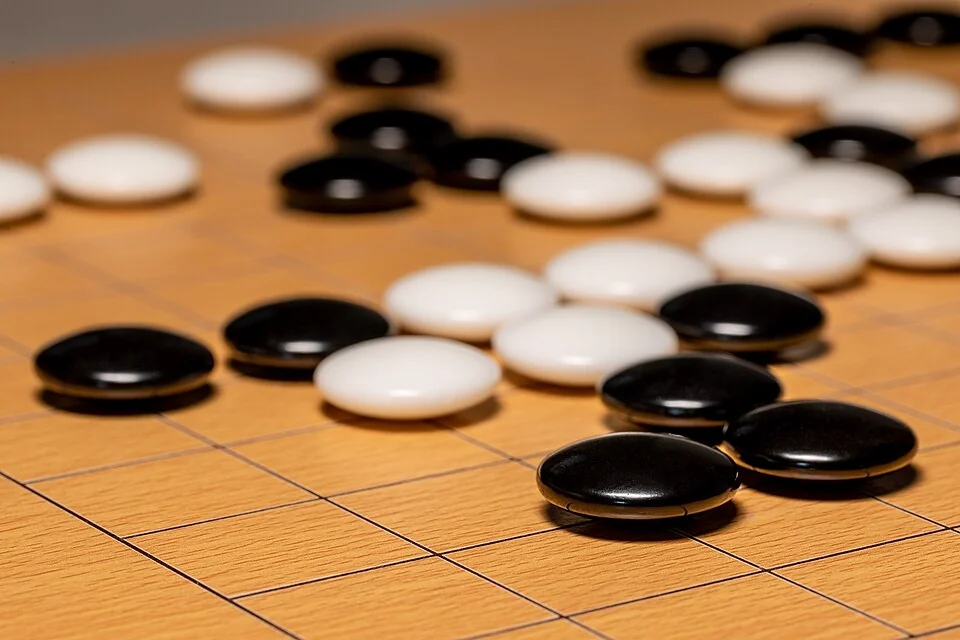
A game in progress, shown as visual context rather than a puzzle with a verified solution.
Image source & license
Culture Japon · CC BY-SA 4.0. WebP delivery copy; resized if needed, composition unchanged. Original image & full credit · License
Beyond the gentleman’s table
Berge-Becker argues that elite accounts represent only part of weiqi culture in the Chinese history examined in his chapter. His chapter examines a broader range of participants and settings rather than accepting the refined gentleman as the game’s single representative. The distinction keeps one social ideal from swallowing a varied history of actual play. [S1]
Think of this as an invitation to look past the cover of a manual. A book can tell us how someone wished a pastime to be understood. It does not automatically tell us what every player experienced, or how every household fitted a game into an ordinary day.
A familiar comparison, briefly
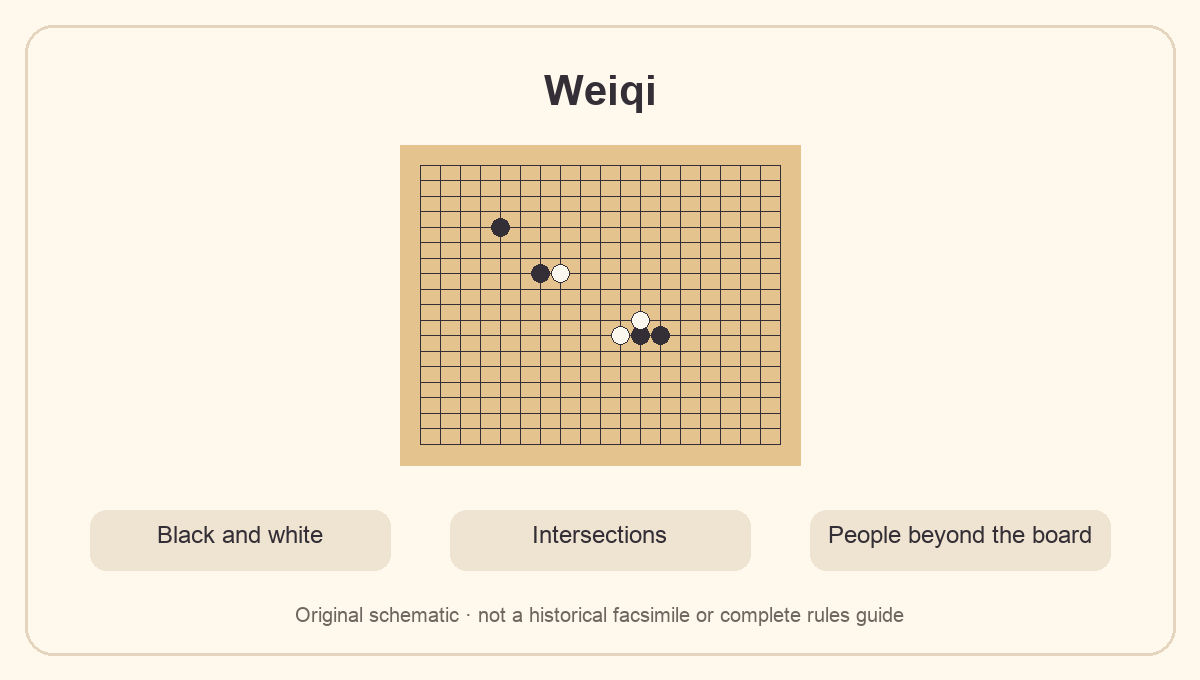
The National Endowment for the Humanities describes Go, called weiqi in Chinese, using black and white stones on the intersections of a nineteen-by-nineteen grid. It notes that the stones lack the ranks of chess pieces. These details give a newcomer something concrete to notice without pretending to supply a complete lesson. [S2]
If you know chess, comparing the pieces can be a useful doorway: notice how much expectation you bring from named pieces with different jobs. The comparison stops there. It is an analogy for an American reader, not a claim that the games share rules, histories, or a single way of thinking.
Stones and intersections close up. The board offers a shared space for individual decisions.
Image source & license
Dietmar Rabich · CC BY-SA 4.0. WebP delivery copy; resized if needed, composition unchanged. Original image & full credit · License
Watch before interpreting
Imagine an invented visit to a community game night in the United States. Ask a willing player to explain one decision after the game. Listen for the situation they describe rather than assigning a national philosophy to the move. One person’s explanation is an encounter with a player, not a population survey.
Your field note might pair Wang’s documented publishing project with a question about whose play gets recorded today. You can leave the scoring system for a dedicated beginner lesson. This first meeting is about a board, the people around it, and the stories that make some of them more visible.
AlphaGo is a modern technology side story. This video does not document the players or social setting of the 1609 manual.
3 optional questionsWant a tiny challenge?
A little practice, with room to try again.
Want a tiny challenge?
A little practice, with room to try again.
How did this land?
Just your reaction, kept in this browser. Tap again to change your mind.
A little trail to follow.
Want to dig into a detail? These links take you to the original sources. Our suggestions and imagined examples are labeled in the story.
- University of Washington: Groups on the Grid (opens in a new tab)
Zach Berge-Becker: Wang Tingne’s 1609 manual and the limits of gentleman-centered weiqi history.
- NEH: Go Figure (opens in a new tab)
Basic black/white stones, 19-by-19 intersections, and absence of chess-piece hierarchy.
What did you notice, what supports it, and what remains open?
Your question, a memory, a different way your family does things — there's room for it here. These notes are just for you in this browser.
Downloads and copies include notes and corrections for this story. To send it to us, attach it yourself in an email to support@goodbye.help. Saved stories and practice scores stay out of the download.