In this story
A note from Common Ground
Common Ground editorial: distinguish documented details from our suggested ways of looking.
A courtyard crossed an ocean
The Met’s account of the Astor Court identifies a particular model: a small courtyard in Suzhou’s Garden of the Master of the Fishing Nets. The project adapted that courtyard model for a New York museum. That is a specific connection you can follow, rather than a claim to represent every Chinese garden. [S1]
Media selection · Reviewed by the project owner on November 5, 2026. Context images do not replace the story’s cited evidence.
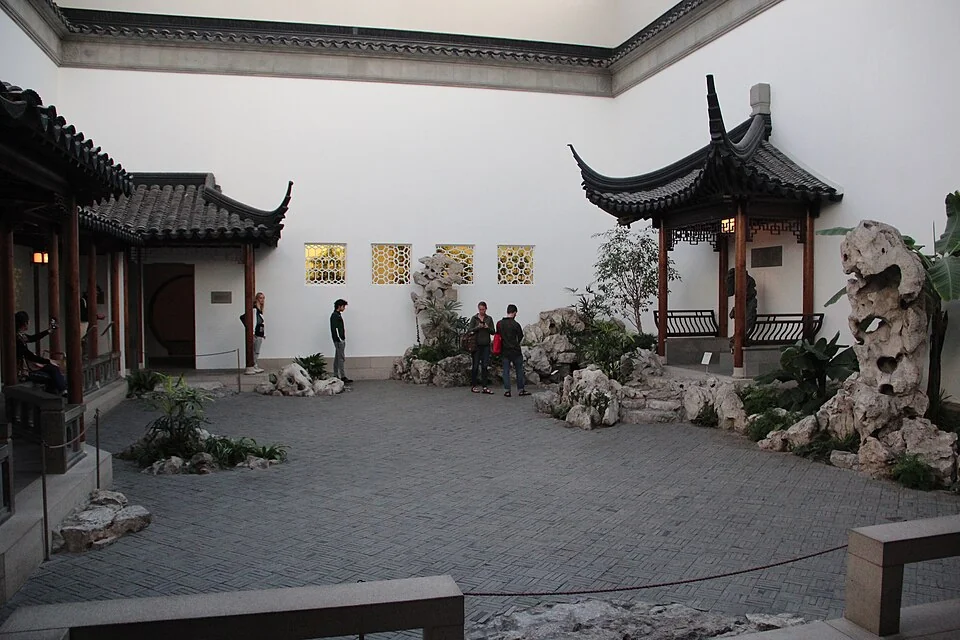
The Met’s Astor Court, the particular place discussed in this story.
Image source & license
Thomson200 · CC0. WebP delivery copy; resized if needed, composition unchanged. Original image & full credit · License
Cooperation became construction
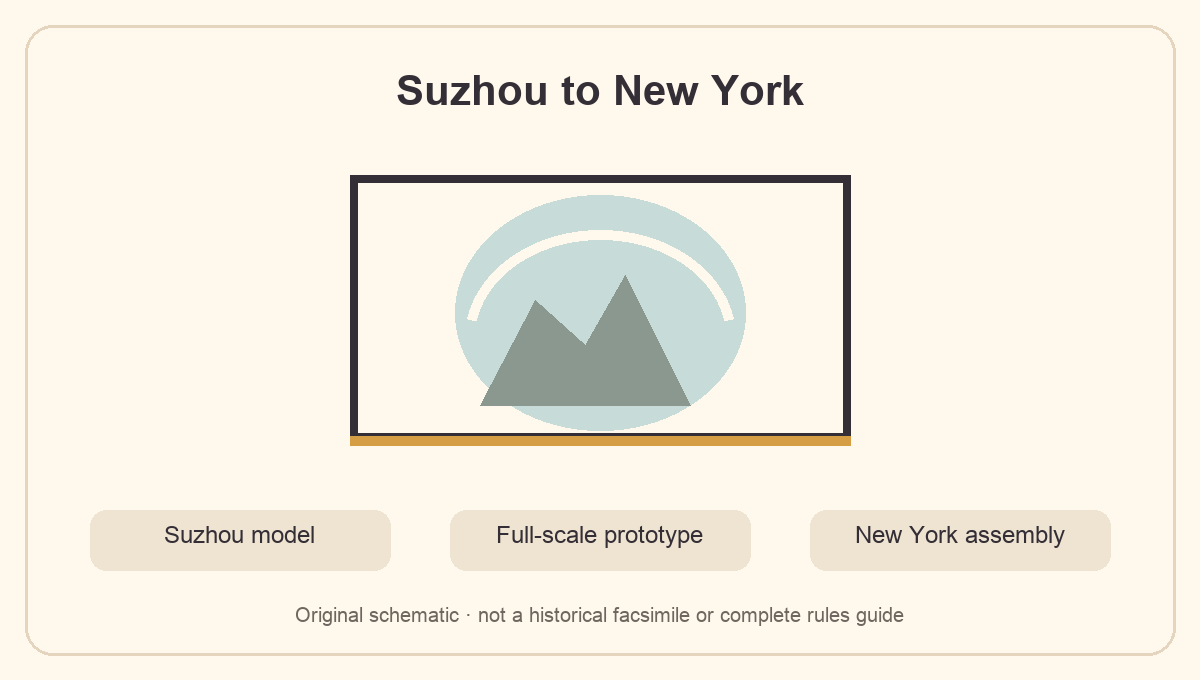
The museum’s publication describes a team from the Suzhou Garden Administration building a full-scale prototype in Suzhou. A team then traveled to New York to assemble components made in China. Chinese and American participants worked together on the assembly. The account also credits the Vincent Astor Foundation with funding the court and adjoining Ming Room. [S1]
A setting with a purpose
The publication explains that the hall was intended to provide a setting for Ming-dynasty domestic furniture. That purpose helps keep our interpretation grounded: this was a museum installation with collection needs, not an untouched courtyard transported out of its original life. The partnership involved choices about what a new setting should enable visitors to encounter. [S1]
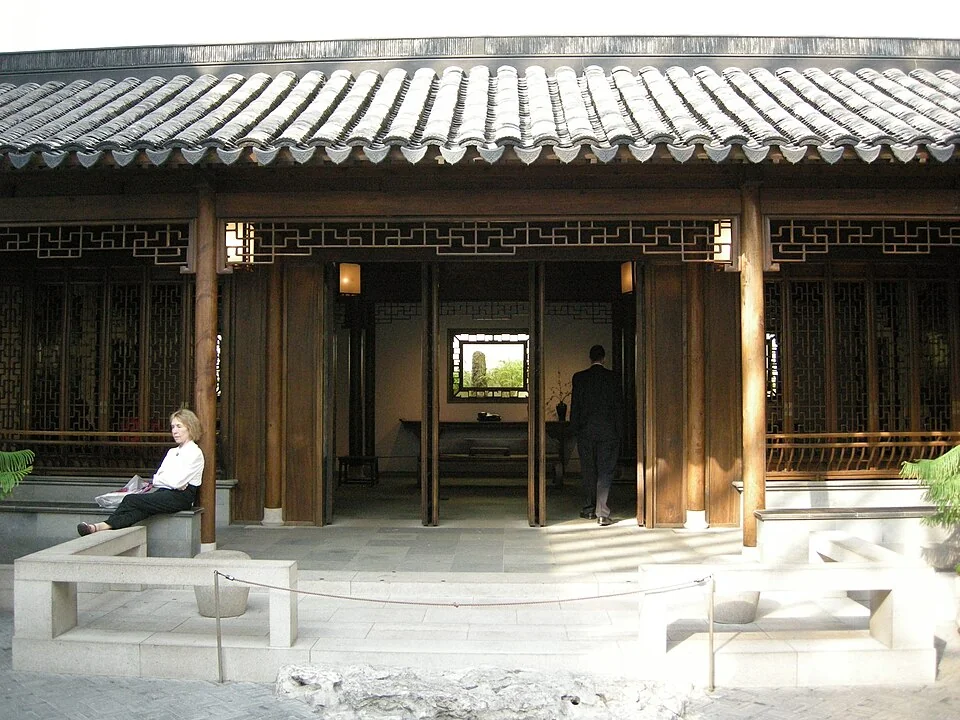
Another court view. Compare the doorway, roofline and route through the space.
Image source & license
sailko · CC BY-SA 3.0. WebP delivery copy; resized if needed, composition unchanged. Original image & full credit · License
Imagine asking who built it
Imagine an invented scene in which two American friends discuss a photograph of the court. One asks whether it looks authentic. The other asks who selected the model, made the components, and assembled them. The second set of questions does not settle the first, but it gives the conversation something concrete to investigate.
Try listing the actions in the museum account without adjectives: modeled, prototyped, fabricated, assembled, funded. Those verbs reveal cooperation more clearly than a broad statement about cultural friendship. They also prevent the physical work from disappearing behind the name of a donor or an institution.
Keep both places in view
For your field note, draw two boxes labeled Suzhou and New York. Connect them only with actions that the source documents. Leave room beside the drawing for a question about adapting a courtyard to a museum. This is an explanatory sketch, not an architectural plan.
You might ask what a visitor can learn from a designed setting and what remains outside it. A single courtyard cannot stand for every garden, every household, or every period. Its value need not depend on that impossible burden. Here, the more compelling story is a particular place becoming the basis for shared work across an ocean, with identifiable people’s tasks and a specific museum purpose.
3 optional questionsWant a tiny challenge?
A little practice, with room to try again.
Want a tiny challenge?
A little practice, with room to try again.
How did this land?
Just your reaction, kept in this browser. Tap again to change your mind.
A little trail to follow.
Want to dig into a detail? These links take you to the original sources. Our suggestions and imagined examples are labeled in the story.
- The Met: A Chinese Garden Court (opens in a new tab)
Search index substantive excerpt only; direct PDF fetch failed because 16,506,872-byte file exceeded tool limit. Supports model courtyard, Suzhou prototype, China-made components, New York joint assembly, foundation funding and furniture-setting purpose. No PDF image inspection; no present-day visit claim.
What detail changed your first impression?
Your question, a memory, a different way your family does things — there's room for it here. These notes are just for you in this browser.
Downloads and copies include notes and corrections for this story. To send it to us, attach it yourself in an email to support@goodbye.help. Saved stories and practice scores stay out of the download.