In this story
A note from Common Ground
Project editorial introduction based on a bounded official summary; observation prompts are editorial.
Begin with the string
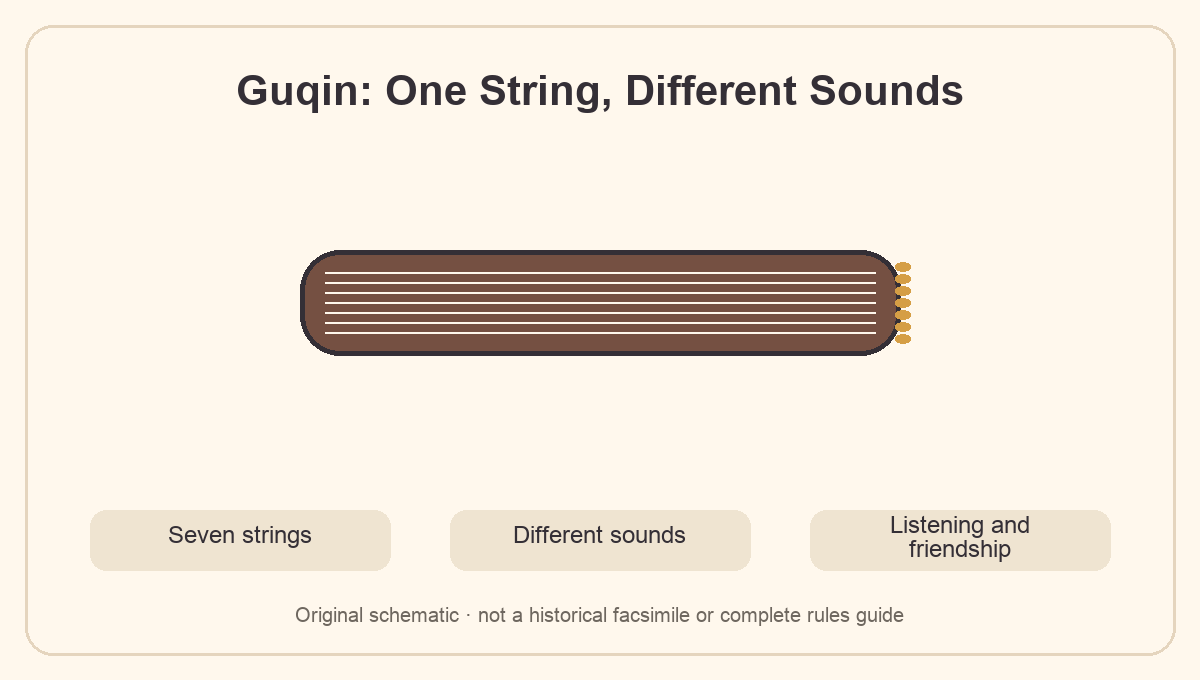
Seven strings and thirteen markers on the instrument’s surface: those details from UNESCO’s guqin introduction make a useful starting point. The guqin is a Chinese zither. Before assigning it a mood or a philosophy, consider how a player’s hands shape a string’s sound. [S1]
Imagine an invented listening break in a US apartment. You have selected a clearly identified guqin recording and wonder what to notice beyond whether you find it relaxing. You need not choose a verdict. A more inviting question is how one instrument can offer different kinds of sound.
Media selection · Reviewed by the project owner on November 5, 2026. Context images do not replace the story’s cited evidence.
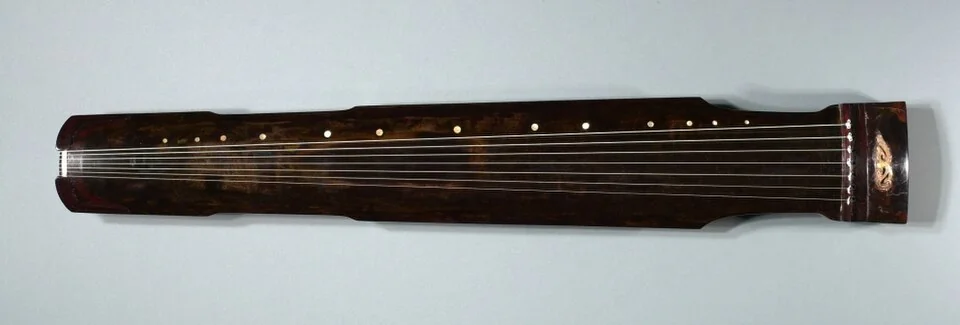
One photographed guqin. A useful starting point for looking at the instrument before listening.
Image source & license
The original uploader was CharlieHuang at English Wikipedia. · CC BY-SA 3.0. WebP delivery copy; resized if needed, composition unchanged. Original image & full credit · License
Three terms to carry
UNESCO names three basic techniques. San uses open strings. An uses strings pressed by the left hand, which may also slide along them. For fan, or harmonics, the left hand touches lightly at marked positions while the right hand plucks. These are listening clues, not a complete playing lesson. The overview also connects guqin practice with Chinese scholarly culture. [S1]
This is introductory vocabulary, not a playing lesson. Reading the terms does not establish that you can identify every sound by ear. Keep them as questions to bring to a well-explained demonstration, rather than labels you must attach confidently during a first encounter.
Listen without a stopwatch
For a future listening session, choose one passage and describe a change in ordinary language. Does a sound seem to move, linger, or fade? These are proposed listening prompts, not findings from a recording reviewed for this article. If you watch a demonstration, distinguish what the camera actually shows from what you infer.
Avoid using your reaction as evidence of a universal effect. “I wanted to listen again” tells us about your experience. It does not prove that everyone feels the same way, or establish a health benefit. Personal language can be more precise and more welcoming than an oversized promise.

A guqin museum setting in Taipei, as identified by the source. Check current arrangements before planning a visit.
Image source & license
lienyuan lee · CC BY 3.0. WebP delivery copy; resized if needed, composition unchanged. Original image & full credit · License
Make room for another hearing
A field note might pair a simple observation with one verified detail: “I noticed a change in sound; UNESCO describes several ways of sounding the strings; which technique was used here?” Add the recording title or demonstration link when available so that your question can be revisited.
A story about listening adds another doorway. Keio University’s account of a bronze mirror retells how the qin player Boya stopped playing after the death of his friend Zhong Ziqi, believing nobody else understood his music. Treat it as a tale of friendship, not a verified biography. The museum also cautions that the mirror’s player is not proven to be Boya. A familiar name can carry a story without identifying every object attached to it. [S2]
3 optional questionsWant a tiny challenge?
A little practice, with room to try again.
Want a tiny challenge?
A little practice, with room to try again.
How did this land?
Just your reaction, kept in this browser. Tap again to change your mind.
A little trail to follow.
Want to dig into a detail? These links take you to the original sources. Our suggestions and imagined examples are labeled in the story.
- UNESCO — Guqin and its music (opens in a new tab)
Official heritage summary; read through search-index text. Direct page access was not established. Limited introductory scope; not an independent field study.
- Keio University: Mirror with figure of Boya Yu playing the qin (opens in a new tab)
Boya/Zhong Ziqi story as a traditional account; mirror figure’s identity explicitly unproven. Unclear date field and AI image tags not used.
What did you notice, and what still needs context?
Your question, a memory, a different way your family does things — there's room for it here. These notes are just for you in this browser.
Downloads and copies include notes and corrections for this story. To send it to us, attach it yourself in an email to support@goodbye.help. Saved stories and practice scores stay out of the download.