In this story
A note from Common Ground
Project editorial: sourced details are separated from imagined practice scenes.
Writing on a pair of chopsticks
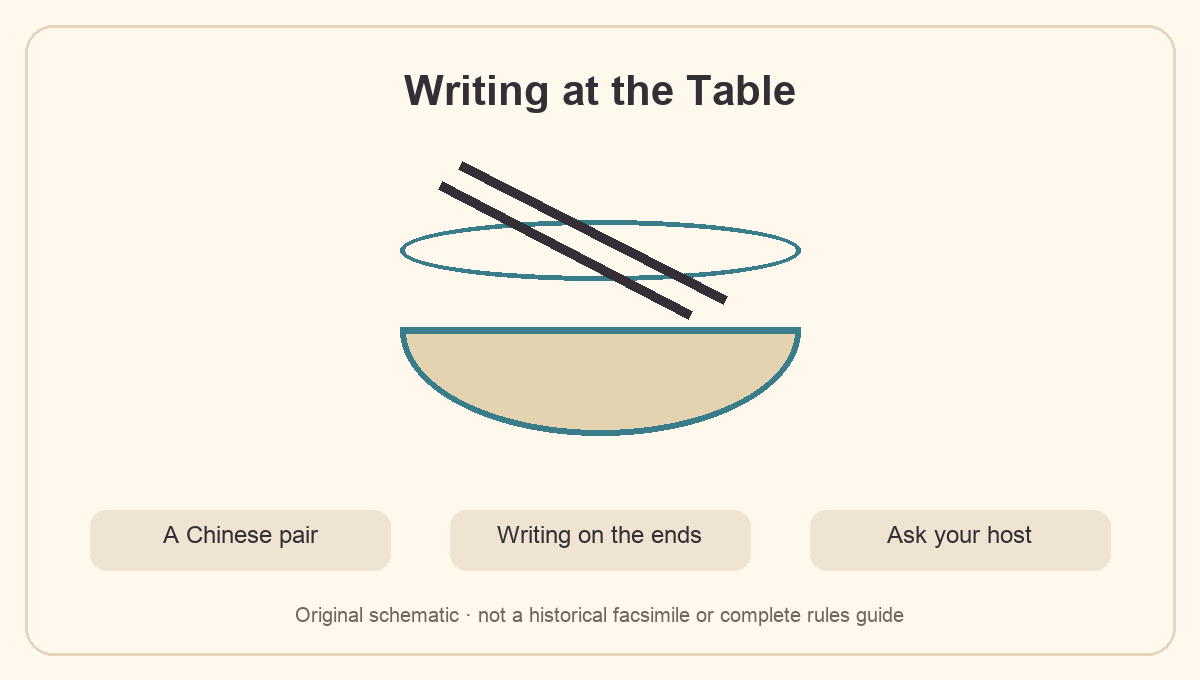
Chinese characters appear on all four sides of the square ends of a pair of chopsticks cataloged by Concordia Historical Institute in Saint Louis. The institution explicitly identifies the pair as Chinese. Its record describes natural wood color, a round end opposite the square end, and a length of ten and three-quarter inches. Here is a particular Chinese object with details worth pausing over. [S1]
The description does not transcribe those characters or identify a maker. We should not guess whether the writing offers a wish, a name, or something else. What we do have is an intriguing meeting of writing and a utensil: a familiar implement can also invite a question about what someone chose to put on it. [S1]
Media selection · Reviewed by the project owner on November 5, 2026. Context images do not replace the story’s cited evidence.
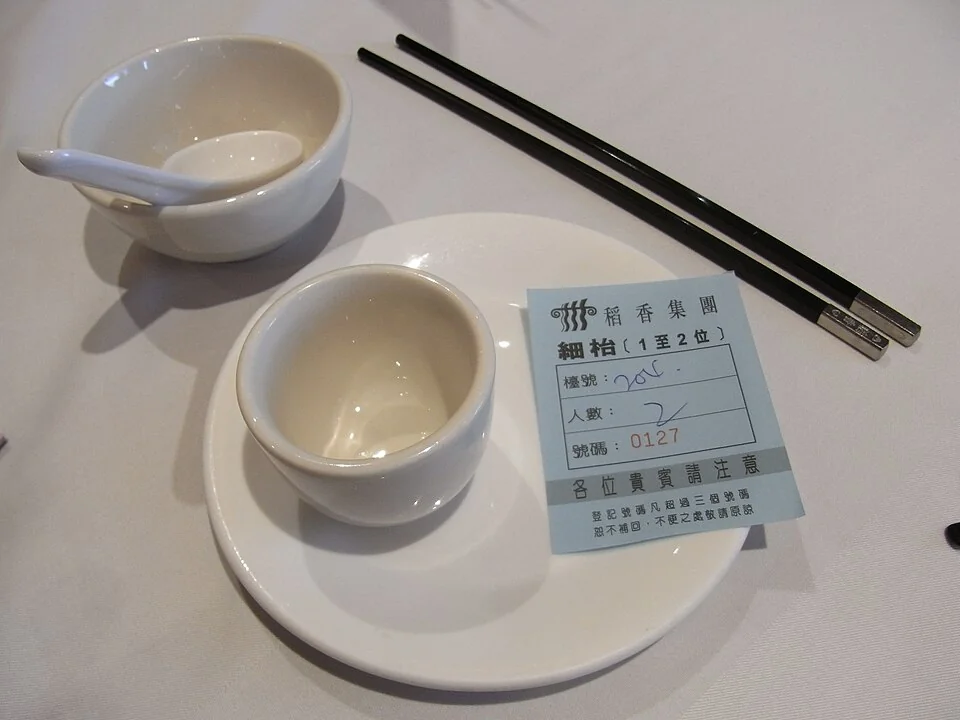
Chopsticks beside one table setting. What else does this setting tell you about the meal?
Image source & license
ClaudiaWooCHEN · CC BY-SA 3.0. WebP delivery copy; resized if needed, composition unchanged. Original image & full credit · License
An imagined dinner
Picture an invented scene at a friend’s apartment in the United States. You are helping set the table, and there are several pairs of chopsticks beside a serving spoon. Instead of trying to recall an online list of forbidden gestures, you ask your host which utensils belong with the shared dishes.
That question is useful because it concerns the meal actually in front of you. You could also ask where to rest your chopsticks between bites. Your host can show you the arrangement they prefer, and you can follow it without announcing a lesson about an entire culture.
Let the object slow you down
Try a small observation exercise before dinner: look at a clean pair with permission. Notice the length, the shape of the tips, and how the two sticks feel together. These are observations about that pair. They do not reveal the owner’s nationality, family history, or attitude toward tradition.
If you are learning, ask for a demonstration with an easy piece of food. A fork is also a reasonable thing to request. The point of an invitation is a shared meal; turning your first attempt into a performance can make it harder to pay attention to the people around you.
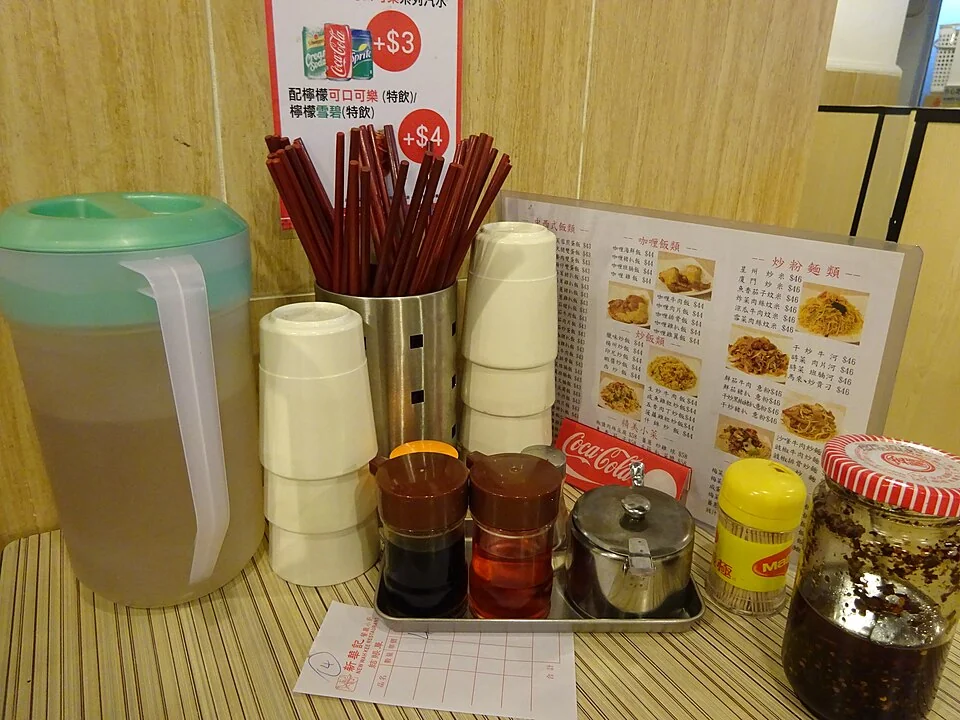
A shared utensil container in a restaurant: one everyday arrangement among many.
Image source & license
SUN WAIYAT Robinso · CC BY-SA 4.0. WebP delivery copy; resized if needed, composition unchanged. Original image & full credit · License
One useful note
In your field notes, separate three things: the catalog’s documented shape and measurement, something you observed at your own table, and one question you asked. That separation keeps an ordinary encounter from becoming an unsupported cultural claim. Begin with the person offering you dinner. Their answer is more helpful for tonight than a universal checklist.
The media here adds dining context. It does not show the specific inscribed pair described in the archive record above.
3 optional questionsWant a tiny challenge?
A little practice, with room to try again.
Want a tiny challenge?
A little practice, with room to try again.
How did this land?
Just your reaction, kept in this browser. Tap again to change your mind.
A little trail to follow.
Want to dig into a detail? These links take you to the original sources. Our suggestions and imagined examples are labeled in the story.
- Concordia Historical Institute: Chopsticks. China (opens in a new tab)
Item 71-2-ANON-881 and paired 882: explicitly Chinese, 10 3/4 inches, natural wood color, round and square ends; Chinese characters on four sides of square end.
What did you notice, what supports it, and what remains open?
Your question, a memory, a different way your family does things — there's room for it here. These notes are just for you in this browser.
Downloads and copies include notes and corrections for this story. To send it to us, attach it yourself in an email to support@goodbye.help. Saved stories and practice scores stay out of the download.